How to Winterize Your Terrace Furniture and Planters: A Step-by-Step Guide
Cold weather rarely announces itself. One weekend you're still drinking coffee outside at nine in the morning, and the next the forecast is talking about frost. Furniture and pots that shrugged off a whole summer of sun and rain handle that shift badly: water seeps into joints, fabric grows a grey bloom of mildew, and terracotta splits along a line you never noticed. A few hours of work now is the difference between a spring of scrubbing rust stains and a spring of simply pulling the chairs back out.
Clean Everything First, Then Let It Dry
Dirt isn't just cosmetic. A film of pollen, sap and dust holds moisture against the surface, and trapped moisture is what causes mildew, rust blooms and dulled finishes over a wet winter. Wash everything with warm water and a squirt of mild dish soap, using a soft-bristle brush for crevices and a sponge for flat areas. Skip the pressure washer on wood, wicker and anything with glued joints — it drives water into places that never dry out.
Rinse with clean water and let the pieces dry in the sun for a full day before you cover or stack anything. Damp is the enemy here, not cold alone.
While things dry, walk the terrace with a screwdriver in your pocket and look for trouble:
- Wobbly legs, loose bolts, hinges that have started to groan
- Rust spots, especially where paint has chipped at the feet
- Small splits in wood that will widen with freezing and thawing
- Mildew on sling fabric, mesh or webbing
A quick note by material
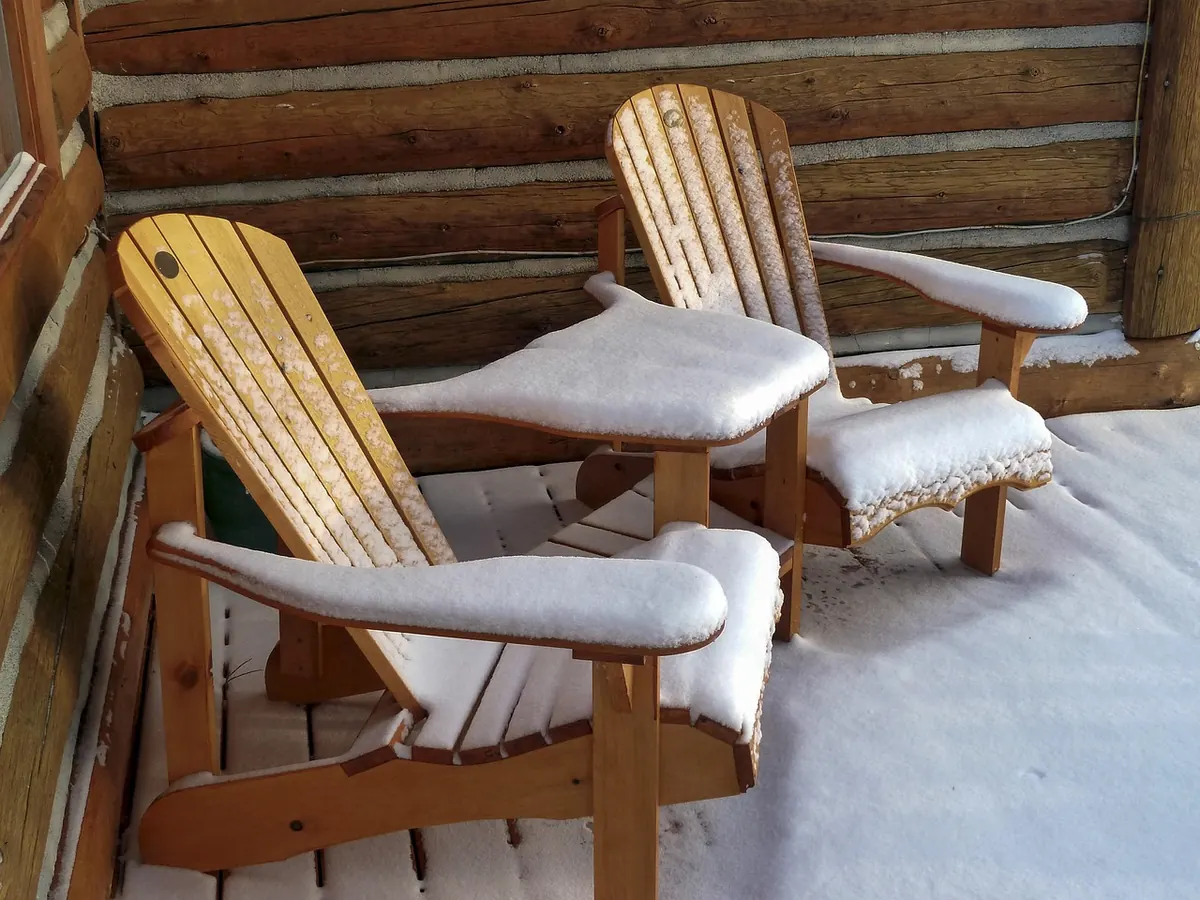
- Wood (teak, acacia, eucalyptus): mild soap and a soft brush. Don't scrub across the grain with anything abrasive.
- Aluminum and powder-coated steel: the easiest of the lot. Soap, water, rinse, done.
- Wrought iron: dry it thoroughly. Rust starts in the corners where water sits.
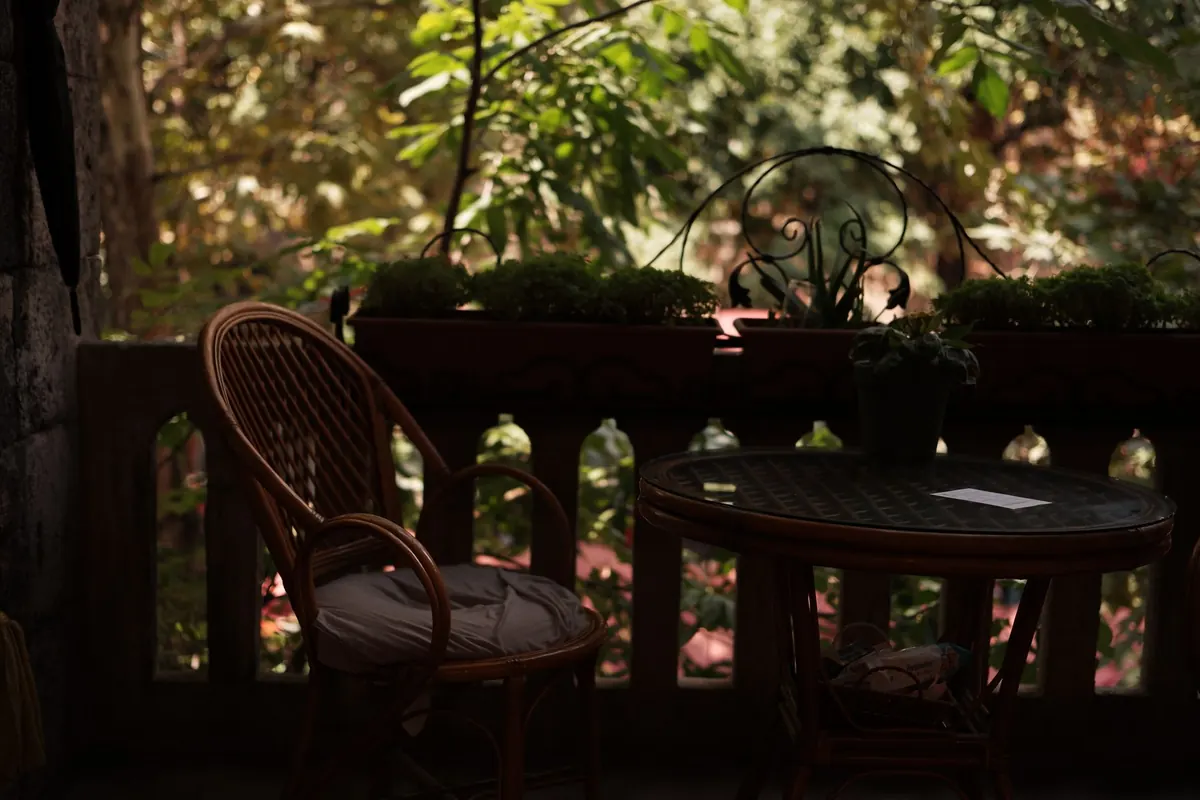
- Wicker, rattan and woven resin: brush out dust, wipe with a barely damp cloth, and never soak it.
- Sling fabric and mesh: a soft brush and mild soap. For mildew, a diluted white vinegar solution or a cleaner made for the fabric works; test on a hidden spot first.
- Cushions: clean them, dry them completely, and bring them inside. A cushion left out all winter is a cushion you'll replace.
Seal, Oil and Touch Up Finishes
Wooden furniture will hold up far better with an annual coat of a suitable exterior wood oil. Work in thin layers with a rag, wipe off the excess, and let it cure for a day or two before covering the piece — otherwise the cover traps the solvent smell and the finish stays tacky.
Untreated teak will weather to a silver-grey, and that's a perfectly good look; oiling keeps it closer to its original honey tone. Either choice works, but pick one and stay consistent.
On metal, sand small rust spots down to bare metal, wipe clean and touch up with matching exterior paint. A rust-inhibiting primer underneath makes the repair last. Then lubricate what moves: hinges, folding mechanisms, umbrella cranks. Use a silicone or dry lubricant rather than a wet oil that will collect grit. Tighten every bolt you can reach, because a chair that's slightly loose in October will be noticeably looser in April.
Leave the indoor furniture polish in the cupboard. Wax and polish made for a living room aren't built for rain, frost and ultraviolet light.
Pots and Planters Need Different Handling
Terracotta is the tricky one. Unglazed clay is porous, and when water inside the wall freezes and expands, the pot flakes or splits. If you can, empty those pots, scrub out the soil and store them dry in a shed or garage. A large planter that has to stay put can be tipped onto its side or have its opening covered with a board so it can't fill with rain.
Plastic and resin planters cope with cold reasonably well but turn brittle, so move them out of the wind and don't knock them around. Metal planters rust from the inside, where soil stays wet — empty those too. If you're unsure about a glazed or stone pot, it's worth asking at a local nursery before you gamble on it.
For plants left outside
Roots in a container freeze faster than roots in the ground, because there's less soil mass and cold air reaches them from every side. Group pots together against a house wall or fence, ideally somewhere that catches a little warmth from the building. Wrap burlap or bubble wrap around the sides of the pot, not over the top — the plant still needs light and air.
Raise every pot onto feet, bricks or a scrap of timber so water drains away instead of pooling and freezing underneath, and empty the saucers. Water sparingly through winter, but don't let evergreens dry out completely; a plant that goes into the cold thirsty suffers more than one that went in well watered. Stop feeding in late summer so new growth has time to harden off before the frost arrives.
Cover What Stays Out, Store What Doesn't
Decide early which is which. Anything with fabric, foam or a folding mechanism you'd hate to replace should come indoors: cushions, parasols, hammocks, spare chairs, small lanterns.
For the pieces that stay, the cover matters more than most people expect.
- Choose a breathable, ventilated cover made for outdoor furniture.
- Avoid plain plastic tarps. They trap condensation underneath, which is worse than leaving the furniture bare.
- Tie covers down snugly so they don't flap and rub the finish raw in the wind.
- Leave a gap at the bottom for air to move through.
Set Up Winter Storage Properly
- Store only what's clean and completely dry. One damp cushion can mildew a whole stack.
- Nest and stack to save space, but slide a cloth or piece of cardboard between surfaces so they don't scratch each other.
- Get everything off the floor. A concrete garage floor wicks moisture upward all winter — pallets or shelves solve it.
- Keep cushions in breathable canvas or cotton bags, never sealed plastic.
- Close parasols and store them indoors, lying flat if you have the room. A canopy left furled and damp for months is a mildewed canopy in spring.
- Scrape the grill, empty the grease tray and cover it. Food residue attracts rodents.
- Drain garden hoses and irrigation lines, and shut off and drain outdoor taps if you live somewhere that freezes hard.
Timing, and the Payoff in Spring
Watch the overnight forecast rather than the calendar. You want to finish before the first hard frost — for many temperate regions that's a dry weekend somewhere between late September and early November, and earlier at higher elevations. Pick a sunny, low-humidity day so everything dries properly instead of sitting damp under a cover.
Do it in one pass, with a checklist, and it takes an afternoon. In return you get furniture that doesn't need re-finishing every spring, pots that survive the freeze, and cushions that smell like cushions. When the first warm Saturday comes around, you'll be carrying chairs outside instead of scraping rust off them.
One last note: if you're caring for antique pieces or an expensive set, follow the manufacturer's care instructions, or have a furniture restorer look at anything questionable before you experiment on it.
Photo: ArtTower / Pixabay